Don Ho: 08:48
Yeah, absolutely. Absolutely.
John Corcoran: 08:50
So you’re practicing law and then when did you get the idea to start a tea shop?
Don Ho: 08:57
The really, really short version is that, you know, fast forward to 20 1213, something like that. I was living in South Orange County, and I was driving up to downtown LA, Riverside, you know, San Bernardino, you know, an hour and a half, two-hour commute every day, three times a week, you know, three days a week. I was in court. So I was leaving the house at 6: 30, wasn’t getting back until about the same time, you know, and after, you know, a couple of years of doing that, you know, I had just had my first kid. I just said, you know what?
I saw the writing on the wall. You know, I saw that if I didn’t get off the hamster wheel of that type of life relatively soon that I would, I would be there until I die. You know, I’d be there until my 60s 70s, just like every other lawyer that I had met, you know, through law school and in practice, and I just didn’t want that. I kind of just made the decision that, you know, there has to be a better way. So, you know, I remember that I had had a friend who had asked me to vet a business plan for him.
He was looking at buying a business. He asked me to vet the plan.
John Corcoran: 10:15
And are you doing civil litigation at this point? We’re kind of.
Don Ho: 10:18
At this point it was business, family, and a little bit of criminal law like DUIs and, you know, basic criminal law stuff. And the year prior, while I was still in full-time practice, he had asked me to vet that plan. And I just remember thinking like, oh, the numbers look pretty good. You know, the margins look pretty good. So that always stuck in my head.
So, you know, one night when I was, you know, at my lowest, I told my wife, you know, I don’t want to do this anymore. And she asked me what I wanted to do. And I said, you know, I kind of want to look into this whole T thing, tea and coffee thing. And one thing led to another. I ended up selling that practice to my two partners.
They’re still going strong. Out there in the Inland Empire. And I took that money, and I decided to open a tea and coffee shop with it. That turned out to be my EO business and the right place, right time. We opened up four stores in the first three years we were open, and then I exited that company in February of 2020.
John Corcoran: 11:25
Did you have a reason why you wanted to exit?
Don Ho: 11:29
They offered me a lot of money.
John Corcoran: 11:30
Oh, that’s a good reason.
Don Ho: 11:32
You know? Yeah. So I was about to start franchising. It was right at that point, at the end of 2019, I had started looking into franchising. Obviously, I was like, okay, I can do this myself.
Being a former lawyer. And two weeks into my research, one of my customers approached me and they wanted to buy my business. So yeah, you know, fast forward three weeks later, we had a signed deal and closed escrow February of 2020.
John Corcoran: 12:03
Your parents had worked hard, scraped so that you could go to law school, you became a lawyer, and then you went back into retail.
Don Ho: 12:14
Yeah. Oh, yeah.
John Corcoran: 12:15
How was that? How did that work out?
Don Ho: 12:17
That’s a great point. When I first did it, they didn’t tell anybody. They didn’t tell the family. They didn’t tell their friends. Yeah.
John Corcoran: 12:29
It’s so much easier to tell the family and friends. He’s a, oh, my son’s a lawyer than to say like he’s starting a tea shop.
Don Ho: 12:35
Yeah. And they didn’t tell anybody until they came about a year in. You know, it took us a little. It took us about 8 or 9 months till we really found our groove, you know, to find the product market fit and get the local neighborhood to discover us and all that kind of stuff. And it’s t you know, like it’s t in, you know, and again, this is 2014. So it’s, there’s a learning curve to it.
That’s why I always say tea and coffee shops. But it wasn’t until around, you know, the end of our first year where we really hit our stride and my parents would come in and see the lines, and then they started bringing their friends, you know, then they might look at my son, you know, he was a lawyer and now he’s doing this. Yeah. No, there was definitely some pride in it after the fact, you know, after I had kind of proven it. But yeah, no, there were definitely conversations about are you sure you know what you’re doing?
You know, and I said, no, but, you know, I was honest. I said, no, but I think I know what I’m doing, you know, and you guys gave me the background and, and that kind of thing. And so, you know, they always had really good business instincts. They ended up having three different businesses over time. They’re all video stores, but three different video stores that were all successful.
Two of them, they sold the last one they sunsetted in 2015 or something.
John Corcoran: 14:07
Yeah. So that that industry, of course, you know, blockbuster became huge. And so a lot of the independent mom and pop video stores suffered. Did they struggle at any point?
Don Ho: 14:16
They made it through that. They made it.
John Corcoran: 14:18
It’s through.
Don Ho: 14:19
All of that. It was Netflix. Netflix was the one that, you know, and it came to a natural close. No one wanted to buy it. But they, you know, the lease ended at the store.
They were able to sell their inventory. And, you know, they had planned well enough that they were able to retire some time. Like I said, 2015, 17, something like that.
John Corcoran: 14:41
Okay, so no more Netflix. And was there a period of time where they were kind of looking at the business and being like this? It seems like Netflix is eating away at all of our business here. Yeah.
Don Ho: 14:52
Yeah. The last the last three ish years, you know, they were seeing, you know, lower sales. So, you know, it kind of came, they naturally knew that it was going to just, you know, run its course. And they were at that age, they had hit, you know, early 60s. So they’ve retired now.
So let me see. It’s 2026. So they sold in 2017, 2018 or the lease ended.
John Corcoran: 15:15
So you are okay, back to your business as a tea shop. You end up selling it. You. The final day is the end of February 2020. So what did you know that we didn’t know, man, tell us like, you sound brilliant.
Don Ho: 15:31
I’d like to take some credit for that and say that I saw something coming. It was just pure dumb luck. You know, I like to say that it was karma for, you know, a previous good deed I did in, you know, in a previous life or something like that. But no, you know, the only thing I take credit for is that they wanted to pay me over the course of that first year of operations. And I had heard, you know, actually one of my forum mates at the time had just completed his sale six months or eight months prior.
So I leaned on him and he kind of walked me through and he’s like, yeah, get as much money as you can up front, you know, at closing. So they were open to it. They were open to the conversation. I took what I thought was a slight, you know, loss there. But at the end of the day, obviously it turned out to be the best thing for me.
And, you know, they were able to withstand everything. So the company is still there, still going strong.
John Corcoran: 16:31
Yeah. Yeah. I mean, a lot of those types of coffee shops and, you know, tea shops ended up doing okay, but I’m sure there was a period of six months, 12 months. I mean, a period of time.
Don Ho: 16:41
Yeah, they closed for about two months. I think they were down for 6 or 8 weeks. Yeah.
John Corcoran: 16:46
Yeah. But you didn’t have to deal with that. So that must have been amazing. You found your way back to practicing law though, right? During that time.
Don Ho: 16:53
Yeah. So, so, so like I said, you know, this was December 2019 that I got approached and, you know, two months later I was out, you know, I was actually.
John Corcoran: 17:04
Looking forward two months. That’s fast. Very 60 days, 60.
Don Ho: 17:08
Days, bro.
John Corcoran: 17:08
Wow. Yeah.
Don Ho: 17:09
So, you know, I still remember it was December 1st, 2019. That’s when they called me. Wow. And then, you know, signing the deal three weeks later, 60 days later was the exit. I was looking into franchising the business that was going to be like our next step and just started researching that, like, like I said.
And. So when they approached and we sold, you know, like, I didn’t have a plan. I didn’t know what I was going to be next. And so, you know, it was nice money. It was good money.
It allowed me to buy the house that I’m sitting in right now. But it wasn’t retirement money, you know? So I went back to what I knew, which was, you know, I had been kind of the local, I like to say the EO legal aid for, for my chapter, you know, my EO friends. Yeah. You know.
John Corcoran: 18:02
That means doing free legal work for people. Yeah.
Don Ho: 18:06
Pointing them in the right direction. Okay. You know, that sort of thing. Yeah.
John Corcoran: 18:11
This is. Go this way. Not that way. Yeah.
Don Ho: 18:12
Yeah. The occasional letter. You know, the cease and desist letter for a good friend that sort of stuff. So what I decided to do was, hey, I’m going to start a fractional general counsel business for all of my EO business, you know, business owner friends, stuff like that. And that kind of just naturally led into the.
The space of compliance, governance, crypto, you know, at this time. This is again, this is 2020. So crypto was starting to get big. There were a lot of people who didn’t understand the, the, the rules, the laws around crypto, you know, the, the, whether or not NFTs were, were securities or not. Right.
Based on the Howey test, all that kind of stuff. So it’s just again, good timing. It led into that which has now led into AI. There’s a lot of AI questions, internal usage, compliance with various laws or the lack thereof. Right.
It’s the Wild West out there right now. The first law goes into effect in the US on, I think, June 1st. June 1st, August 1st. Sometime this summer. Colorado is the first state that has a formal AI legislation going into effect.
John Corcoran: 19:42
And you, like me, kind of discovered The ChatGPT day. It was November of 2022, I believe. So you discover it. Tell me a little bit about what that epiphany was like.
Don Ho: 19:54
Yeah. You know, whatever, 4 or 5, seven days in, you know, you start hearing about this, this new tool. I’ve always been, you know, on the bleeding edge, the early adopter of technology, I was one of the first shops that went cashless back in 2018, you know, pre Covid. Now it’s second nature, right? You go into a shop, sorry, we don’t take cash.
No problem. But back then it was a big deal. We had to do a lot of education.
John Corcoran: 20:23
We literally said we’re not taking cash anymore in 2018. Wow. Yeah.
Don Ho: 20:28
Wow. Yeah. There were painful days. There were painful days. I’m not gonna lie.
John Corcoran: 20:32
Painful days mean like people came in with cash. They’re like, I want to buy a drink. And you were like, sorry, we don’t take it. Yeah. And what was the reason behind it?
Don Ho: 20:42
I just hated dealing with cash. It was just one of those things. I saw where the future was going. You know? You know, I’m the guy who waited for hours for the first iPhone.
You know, I was like, yeah, my buddy who I just saw this weekend from law school makes fun of me still because I was the only kid in class with a palm Pilot, you know, back in 2003, whatever it was.
John Corcoran: 21:06
Yeah. I had a palm pilot too. Yeah, yeah.
Don Ho: 21:08
You know.
John Corcoran: 21:09
So I was so excited about Palm Pilots because you could have your schedule on there and contacts and sync them with your computer. That was revolutionary.
Don Ho: 21:15
Calendar and all that kind of stuff. Yeah. So yeah, so I feel seen right now. John.
John Corcoran: 21:21
Yeah. So you get rid of cash because you don’t want to deal with all the junk you have to deal with with cash. Okay. Yeah.
Don Ho: 21:29
Counterfeit bills, you know, all that sort of stuff, you know, customers counting cash back wrong, you know, all those things. So to me, it was a convenience thing. Yeah. I didn’t see it from the perspective of, hey, you know, a middle school kid comes in. He probably only has cash.
You know, but yeah, I mean, my 13 year old right now, we got her her first debit card. We opened a checking account for her so she could have her own debit card. Because so many shops are now only taken.
John Corcoran: 22:02
Only.
Don Ho: 22:03
Cashless. Right. So yeah. But yeah, so, you know, just, just like you, you know, always between Twitter and Reddit and that kind of stuff. It’s like, hey, this is the new thing.
I’ll be honest. It was like, okay, this is interesting, but it really didn’t move the needle yet back then. But I’d check back in three months and six months later and it just kept on getting smarter. Yeah, it kept on getting smarter. People who knew me or, you know, my friends and network would ask me questions about it.
So that kind of forced me to stay involved in it. And it was about two years ago where I discovered anthropic, you know, the makers of the plot. Yeah. I really liked their mission, you know, about staying kind of like not as for profit, you know, not as corporate as other people were getting. And they seemed like there were more guardrails, you know, kind of, kind of.
AI for the greater good. Yeah. We’ll call it. And, you know, now we’re kind of seeing that come to fruition.
John Corcoran: 23:18
Absolutely. Just a couple of weeks ago, with the negotiations with the Department of Defense and their refusal to agree to some conditions in their terms of service, that would have allowed the Department of Defense to use it for domestic surveillance, or I think there were a couple other issues as well.
Don Ho: 23:33
Autonomous weapons.
John Corcoran: 23:34
Right?
Don Ho: 23:35
Stuff like that.
John Corcoran: 23:35
Yeah. Yeah. Fascinating. How do you go into doing fractional general council work for other companies? How does that bleed into now you’re actually doing AI projects, which is what you’re doing now.
Don Ho: 23:52
So again, back to Claude and Anthropic Claude code kind of changed the game, right? I heard about it. I, you know, I kind of saw it. I’m not going to say I’m an expert user by any means, but I know how to use it. And the next step was really Claude’s co-working in January of this year.
That was the real turning point for my own personal usage. And then obviously the OpenClaw software that came out around the same time.
John Corcoran: 24:31
Which people are comparing to like that ChatGPT moment when OpenClaw came out, and people started testing it and being like, oh my gosh, this is, this is revolutionary.
Don Ho: 24:40
Exactly. Yeah. Yeah.
John Corcoran: 24:41
Yeah. And how did you start using OpenClaw in your business?
Don Ho: 24:48
So going back to that reference to the Palm Pilot, it’s literally always been my dream to have, you know, that is that assistant who just remembers everything, you know, the second brain, whatever you want to call it. I’ve gone through, at this point, probably 5 or 6 different software programs too, to try to figure out that that second brain, someone who could remember me, you know, remember everything I’m trying to keep track of. Like a lot of successful entrepreneurs, I’m slightly ADHD, neurodivergent, whatever you want to call it, which is both a superpower and a curse, you know? Right. Yeah, sure.
So I will come up with a lot of really good ideas, but I won’t have the patience and focus to go through with a lot of them. Yeah, yeah. So, you know, now we actually have tools that you can actually finish projects quickly. Yeah. And that’s kind of been the, the, you know, the blown mind, you know, moment where, oh my gosh, all these different ideas we can do now.
You know, we can actually accomplish these things.
John Corcoran: 26:04
And again, kind of going back to this, what we were talking about earlier with, with lawyers, you can figure stuff out. So you, you go from, I’m helping you with legal advice to, oh, I’ll just build it like I can create it for you.
Don Ho: 26:16
Yeah, that’s, that’s literally exactly what’s happened.
John Corcoran: 26:20
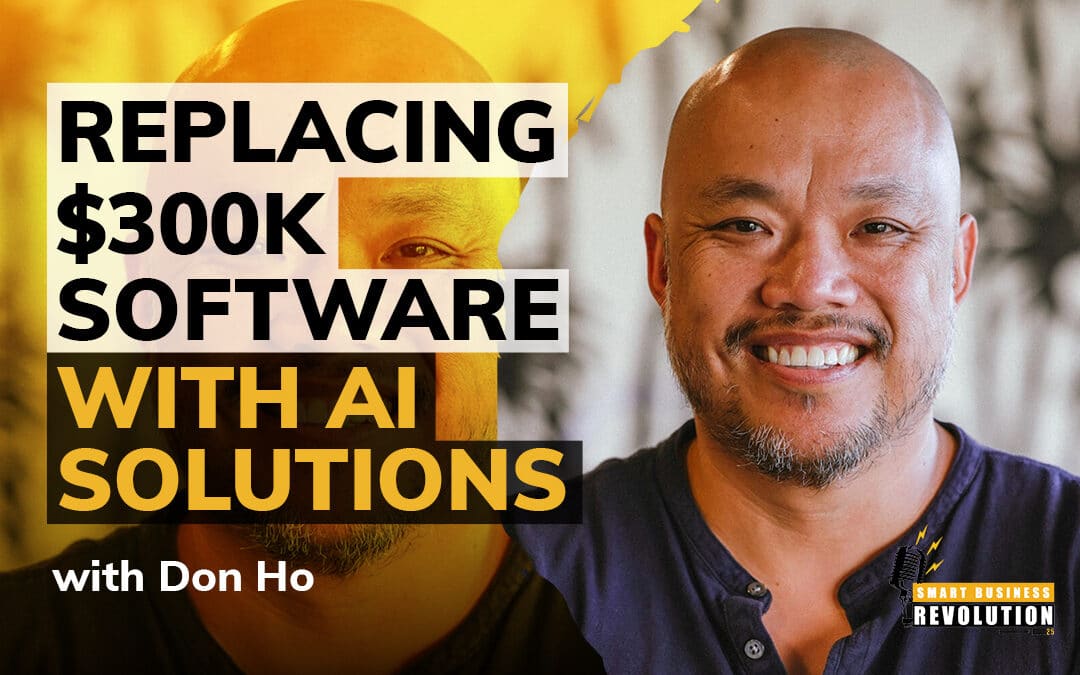
And now and now you have this project that you’re working on. Tell us about this project that you’ve worked on that is replacing basically a $300,000 piece of software with something that you’ve built in about a month or so.
Don Ho: 26:32
Yeah. So there’s very expensive enterprise-level software. We won’t name names, but my clients pay them, you know, 300 K a year. Wow. To act as kind of the top, top of funnel, you know, application layer and, you know, the CRM for this company and we’re able to build it.
We’re able to build it out in about three days, you know. The project was our deadline was five weeks and we’re going to finish it basically right on time. We’ve passed 550 different cybersecurity tests. There’s PII issues, there’s HIPAA, you know, issues and compliance that we have to deal with. We’ve got a full penetration test that’s scheduled for ten days from now.
John Corcoran: 27:30
Wow.
Don Ho: 27:32
And yeah, we were able to basically replicate all of that for them.
John Corcoran: 27:39
And if I told you a year ago or two years ago that you’d be creating a project like this, you probably would have said, I’m crazy.
Don Ho: 27:46
Yeah, I’m not a developer. I’m not a coder. I’ve never written a line of code in my life. You know, so to your point, you know, from earlier, all of my advice before was just advice, right? This is what you should do now.
You know, either I can refer you to a developer or, you know, you should do X, Y, and Z, but I couldn’t actually help you implement. Yeah. Until basically 90 days ago.
John Corcoran: 28:11
And did you, did you like every good entrepreneur? Go find someone else who could help you to do this? Or you do a lot of this stuff yourself. Okay. All right.
Don Ho: 28:19
Yeah. So, I have a technical partner in Kaizen and, you know, it works out really well. He loves getting into the nitty gritty and the weeds into this kind of stuff. And, you know, in reality, obviously, he’s the one who’s building the majority of this. I’d say this project is 80/20.
You know, at this point, we have a good symbiotic relationship where I’ve got a lot of contacts. You know, I’m a little older. So I have the experience and the resume and the contacts and people who approach me. And then we work on the solution together. And then he builds it, you know?
Yeah, I can, I can interpret what the client wants and needs and put it into a PRD, you know, a roadmap for, for him. And he takes it and runs with it, with our, with our colony of agents that we’ve built out. You know, we have at this point a couple dozen different types of agents that we’ve built. You know, I am a big believer in we build it out ourselves so that we don’t worry about malicious code, you know, security issues that you have to be concerned about if you’re just using someone else’s, someone else’s product, someone else’s code, etc., etc., you know, we definitely will use that as inspiration. Like, hey, this is, this is a new product, a new feature, a new skill that came out.
How do we, how do we copy it? You know, how do we compare it to what we currently have and how do we improve our systems? You know, so we actually created a bot that every week will audit our tech stack, our skill stack, I should say, and compare it to the latest and greatest that’s out there on Twitter, on GitHub, whatever. So again, you know, just building this system, that Self-improving system.
John Corcoran: 30:28
Self-improving. Yeah, exactly. It’s amazing. It’s an amazing world we’re living in, isn’t it?
Don Ho: 30:32
Yes it is.
John Corcoran: 30:34
Yes it is. Well, that’s really cool. And what other sorts of projects do you see yourself taking on, or have you been taking on so that people are listening to this, know what they can reach out about?
Don Ho: 30:45
Yeah. So I mean, at a basic level, it’s an understanding of what AI is and what it is not. I’m getting a lot of people who either don’t have an understanding of where we’re at. They haven’t paid attention. You know, I’ve got friends.
My wife has friends who’ve never heard of clot, you know, because I, you know, my wife didn’t know about clot until three months ago. And now, you know, she has her own open claw bot, you know, and talks to it every day. And. So she was kind of asking a handful of her friends. She’s a pharmacist, so she’s in the medical field.
And most of her network has no idea of what’s out there and what capabilities there are. Or on the flip side, you have people that are, you know, the, the phrase, the Dunning-Kruger effect. You have a lot of people that, that, that we’ve met who have an unrealistic expectation of how simple it is to implement. So I’ve taken it upon myself to kind of just be an educator, right? And just explain to people, here’s where we’re at, here’s where we’re going, you know, but what is reality?
You know, just kind of establishing realistic timelines and, and, you know, that sort of thing. But honestly, like I said, you know, we had no idea we could do the project, you know, replacing that, that software. They came to us and we asked them, you know, what’s your biggest pain point? What’s the biggest expense, that sort of thing. And we’re under that deadline because they would have to renew.
They’d have to one up, you know, they’d have to renew for, yeah, for another year, you know, by April 15th, I think it was. So that’s why we were under the time crunch. We were under. And you know what. Hey, we’re going to pass the test.
So that’s amazing.
John Corcoran: 32:48
That’s amazing.
Don Ho: 32:48
It’s pretty cool.
John Corcoran: 32:50
So all right. Cool. Well, Don, this has been really fun. Really interesting. I’m sure we could talk a lot longer, but let’s wrap it up.
And where can people go to learn more about you and connect with you? Reach out if they have any questions.
Don Ho: 33:02
Yeah. So again, it’s Kaizen AI Lab. So that’s the website kaizenailab.com. LinkedIn Twitter @dhoesq.
John Corcoran: 33:16
Great. All right, Don, thank you so much. Thank you, sir.
Don Ho: 33:19
Thank you, John.
Outro: 33:23
Thanks for listening to the Smart Business Revolution Podcast. We’ll see you again next time. And be sure to click subscribe to get future episodes. 00:00
Pages: 1 2