
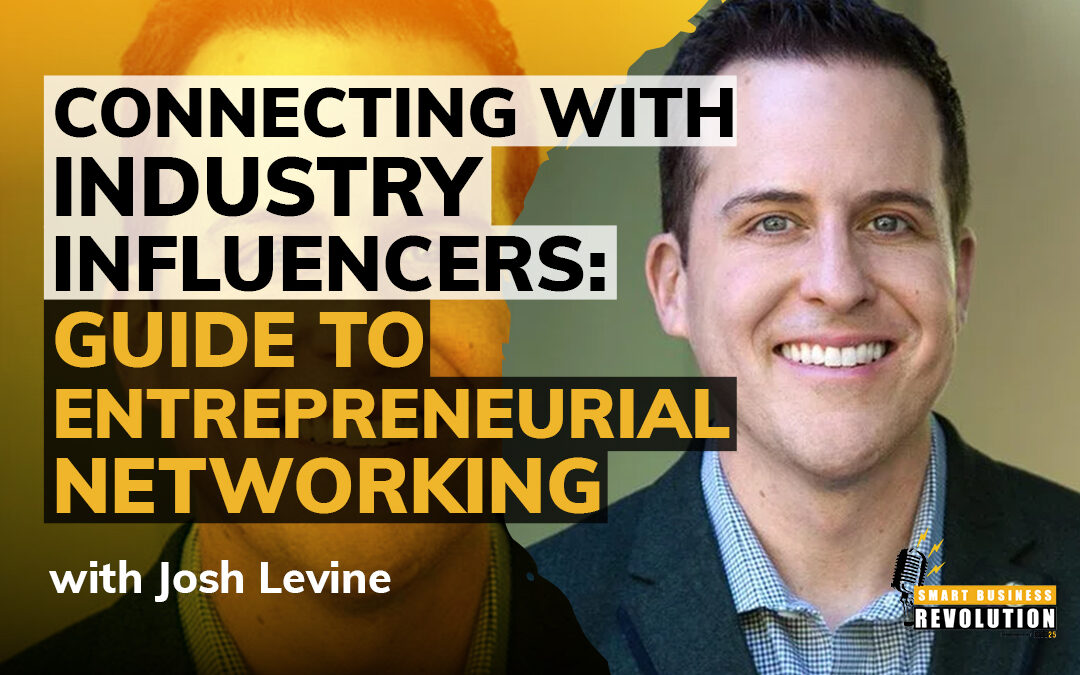
Josh Levine: 11:10
Yeah. Yeah, sure. So I was working on a deal I mean, at the time, you know, this is, you know, circa 2001, maybe 2002, I forget. But, you know, Microsoft was trying to figure themselves out. And, you know, with due respect, they hadn’t figured out the search thing.
Right. And these were the Linux compete days where, you know, things were growing pretty hard and Windows developers were having some difficult things, difficult times, finding content on MSDN and TechNet, which were the main networks for developers to actually code and build a Windows ecosystem. Right. So, you know, this is, you know, 20 plus years ago now. So there’s everything’s in the public domain.
Microsoft figured it all out. But one of the things to kind of jumpstart that was there was a little company nobody heard of in Mountain View. You know, it’s called Google, right? They were about 150 people. And, you know, they were just another usual suspect.
Do you remember those days? There was AltaVista, there was Akamai, there was Blue Mountain, there was Ask Jeeves. Right.
John Corcoran: 12:03
And Google.
Josh Levine: 12:04
Yeah, exactly. But at the time, Google looked like they had something special. No one knew it would turn into the company. It is today, right? Yeah.
But I did the first deal between Microsoft and Google, and we had Google come in and, you know, do a vertical search on Google, which was google.com, I think at the time, Windows or Microsoft, I forget. And it gave the ability for Windows developers to find the content they needed to develop on the Windows platform, ahead of Microsoft kind of upscaling MSDN and TechNet search and all that. And as part of that deal, we did the first ad contract between Google and Microsoft for Google AdWords they acquired. I think it was AdMob at the time, which turned into Google AdWords, and it was an amazing time. I learned an incredible amount and got to know you know the Google old guard.
There pretty well.
John Corcoran: 12:50
And you offer you got offered a job from Google.
Josh Levine: 12:53
Well I was going for a job there. My joke funny enough was I was going for a job there. And then, you know, more on here. I like to say meeting me decided. You know what?
I’m good. I’m at Microsoft. This is an amazing experience. You know, life is great. Why would I go to this little startup of 150, 160 people, right?
John Corcoran: 13:11
Right.
Josh Levine: 13:12
That was kind of the joke now looking back on that.
John Corcoran: 13:14
But I mean, Microsoft at the time in the 90s was the well.
Josh Levine: 13:18
This was the.
John Corcoran: 13:19
Year 2000.
Josh Levine: 13:21
- But yeah, Microsoft.
John Corcoran: 13:23
Was after the previous ten years, it had been the biggest tech company on the planet.
Josh Levine: 13:27
Why would you leave for a little startup? I mean, I have half of it here. Here’s my Google lava lamp. So this is whatever that would have been worth it says Google on it. But I got this cool thing for doing the partnership.
And then obviously I didn’t get what my friends got that started at Google a couple years pre IPO. But that’s just a funny story.
John Corcoran: 13:44
Now, have you ever done the math on what your shares would be worth. Or do you not do that?
Josh Levine: 13:49
If I would have started, then yes, because I know somebody who went to go work there at the exact time I was looking. But, you know, I just keep that between me and my therapist.
John Corcoran: 14:01
Tell us about 2012. You’re working for a startup that you had this incident where you almost died, and there’s kind of a lesson behind it, around overworking yourself to the point of exhaustion. Tell us the story.
Josh Levine: 14:17
Yeah, I don’t know. It’s probably somewhere in that time frame, but. But long story short, yeah, it was rough and it was a good lesson for me and a good wake up call. You know, we’re working on a deal running business development for a software company. And let’s just say things were not advertised in terms of what the company was actually selling to investors.
And that was unbeknownst to me and unbeknownst to the group of executives working in that company. And although there was no fault of my own in terms of the way fundraising was happening, other people invested in that company that thought they were getting an Apple, and they ended up getting an orange. Right. Just very different than they thought. And, you know, again, had nothing to do with me.
I mean, I’m assuming the financials I’m getting and the deck I’m getting is legitimate, up to date and frankly, accurate. And, you know, things are being done the right way and things were not being done the right way, frankly. And I internalized it. And rather than just realizing that, you know what? And I learned this obviously many years later, right.
The idea that control the controllables like, what is in your control, that out of your control and how do you let go of stuff that doesn’t serve you, that’s that’s out of your control? But at the time, I hadn’t learned that lesson, frankly. So I internalized that. I learned a really hard lesson between mind body, you know, and yeah, I cut myself and ended up getting a which is no big deal. We cut ourselves all the time in life.
But I ended up getting a really nasty staph infection, which.
John Corcoran: 15:45
What’s the connection between the two like?
Josh Levine: 15:47
Well, when I talk to the infectious disease doctors at UCLA, the mind body connection is absolutely there. When you are so stressed out and you run your immune system so low because you haven’t processed what’s going on in your life, then you’re just there’s no defense systems, there’s no T-cells, there’s nothing to get out there and defend. So I didn’t realize this, but the number one reason people go to hospitals is staph infection. Actually, it’s very common, right? But normally you get a cut, you put a little Betadine on it.
You’re good. Or a little Neosporin, no big deal. But like, if, if, if you break. I didn’t know this, but staph staphylococcus is living the inside of your nostrils. It’s on the outside of your arm.
It’s on the outside of your neck right there. But like when you get a cut, like, you know, your body fights it off in 98% of the time, there’s no issue. But if you have nothing inside because you’re completely stressed yourself out, guess what? Like it caused me to be in and out of the hospital three times. Multiple surgeries.
It was like this horror movie and it wouldn’t die. And then I was on a work trip to New York and then took my shirt off and saw another red spot, and it was expanding. And then I had emergency flight back to UCLA surgeries, vancomycin drugs, a last resort, IV antibiotics. It was crazy. And this happened multiple times over a year period.
It was it was crazy. Yeah.
John Corcoran: 17:02
And what was the solution?
Josh Levine: 17:05
I mean, partly it was just a lot of crazy antibiotics and a little bit of luck with some experimental drug that that really helped and saved me. I mean, it was in one of those double chamber rooms, you know, where you’re totally isolated and people walk in, they look like they’re on planet Mars, right? And you get all these doctors following going, like, what’s with this freak? What’s his problem? Why can’t we solve this?
Right? And it’s just it was super, super scary. And I told myself, if I, if I get out of that, then, you know, things are going to change quickly, you know? And I’m proud of myself that like, what do you say?
John Corcoran: 17:38
What sorts of changes did you make after that?
Josh Levine: 17:41
Well, what I was saying about realizing, you know, what’s what, your hill to die on and what’s not, and what’s in your control and what’s not, and learning to separate that and to only control really the controllables the thing that you can control, I can only control my own integrity. What I do, how I run, if somebody is doing something that’s not right and sure it affects everybody around you, but knowing. Yeah, what what’s in your control and not and leaving the rest. Because if you don’t, the danger is that you can internalize that, right. And stress yourself out to the point that your body just absorbs all that and then you break down.
John Corcoran: 18:13
Yeah, yeah. You’ve got a you’ve worked a number of different places, but Color More Lines is your company now. You also have Growth Avenue which is your strategic advisory boutique consultancy. Also, Color More Lines is a boutique e-commerce consulting firm. How did you get into that area?
We’ve got politics, we’ve got Disney, we’ve got Microsoft and Google.
Josh Levine: 18:37
Yeah, yeah. So it’s just it’s an interesting journey. So I kind of left Microsoft, got kind of the entrepreneurial bug and decided I wanted to go, you know, be an entrepreneur. And, you know, the first one was an amazing run. We it was a couple guys from Corp Strat and you know, we started this mobile social network and later down the road Tinder stole the idea.
But you know, the swipe left swipe right. You know like somebody not like somebody. All this. But remember this is like 2006. Back in the day when there was there was no smartphone, there was Motorola clamshell razors.
And we were coding on WAP. And it was it was an amazing experience. We took money from Sand Hill Road and, you know, venture money in in Seattle as well. And, you know, we learned a hard lesson around preferred share class in the financial collapse of 2007 and eight. You know, and when a VC or fund goes belly up and fingers start pointing right.
And then your debt holder, Silicon Valley Bank says, you know what? We’re the debt holder. Let me show you what a lien looks like. And slapped a lien on the business. Forced to sell the company learned.
We learned some really hard lessons there, but it spun me off into a series of start ups. And, you know, you learn from everything, right? I feel like in life I’ve always learned from my mistakes more than my successes. I mean, what do you learn from his success? Right.
John Corcoran: 19:50
Yeah.
Josh Levine: 19:51
And so I’ve never taken venture money after that again, frankly. And, you know, always been, you know, common shares, everybody’s equal. And not saying anything wrong with venture money. I advise a lot of companies now on taking venture money, but understanding what that looks like and the T’s and C’s to make sure that, you know, at the time we did the best we could. We were like a babe in the woods.
But also to give us credit, it was also the worst financial collapse in 50 years. Lehman brothers went belly up and the world was crazy, right? So there’s some weird stuff that had nothing to do with us. But to answer your question, several startups later, I was at a startup in Santa Monica called Service Mesh as VP of Business Development Partnerships. And we were we’re about 200 people or so, something like that.
And we were acquired by Computer Science Company, which was an 80,000 person body shop at the time in Virginia trying to figure out what they wanted to be and stay relevant in the cloud space. And we had a software solution that was doing brokering between AWS and Azure. So you could literally port workloads from, you know, the application layer all the way down the entire OSI stack down to the environmental layer, right. And because otherwise, you know, the switching costs are so high between AWS, Azure, Oracle, all this. But to be able to literally copy paste a workload and not have switching costs and be able to negotiate with these massive IT companies and software companies was great.
And we were a darling software product. And then computer science company merged. Meg Whitman sold off Hewlett Packard Enterprise, which is 100,000 person services organization, was 180,000 person company at the time. It was crazy. And I had an opportunity to run the AWS practice for that company.
I learned a ton. I got to meet the whole Amazon team at the time. You know, Andy Jassy, his whole team on down. It was an amazing experience. And Amazon at the time and AWS, which as you know, is the money maker at Amazon.
John Corcoran: 21:38
It is now. Was it then?
Josh Levine: 21:39
Absolutely. It was the moneymaker. I mean, the retail business that you and I buy our socks on or whatever, we buy our toilet papers, you know, whatever. If you look at their their filings, right. Relative to what AWS spits off.
Right? It’s only gotten better for them. But so, so so yeah, we were like, you know top partner for them. It was amazing. They had thousands and thousands of partners.
We’re doing integrations across different industries and all that and using this proprietary software. Anyway great experience. And then you know, when when I was vested and done at the time I left and co-founded a, you know, on the commercial side of things in Amazon agency and that was like, you know, eight years into that, it was an amazing experience. And we kind of learned a lot of things to do differently than a lot of agencies do today. And the companies had an incredible run.
John Corcoran: 22:28
We mentioned we teased this at the beginning, talking about connecting with influential people. Andy Jassy is the not as publicly known Jeff Bezos, now CEO of Amazon. Any any lessons to be learned from being around him during that period of time, or any interactions with Bezos or anything like that?
Josh Levine: 22:48
No, not with Bezos. We did have some meetings with Andy, mainly with Mike was incredible. And the entire sales team that was over there. It was it was I mean, we met some incredible people. I had nothing but great things to say about everybody that I’ve met there.
But the question just around, you know, it was a question just around influence.
John Corcoran: 23:09
And yeah, you know, these are incredibly successful, incredibly busy, influential people across different industries. And just, you know, a lot of people struggle with that idea of how you connect with someone like that.
Josh Levine: 23:22
Yeah, I think it’s a great question. And I think it’s look, you meet them where they are in my experience, and we work with people up and down the organization at Amazon. And the culture is very tight. You know, they have the six page narrative and it’s very different than PowerPoint. And what I was used to at Microsoft and other things.
But I feel like in my experience, if you meet people where they are in terms of the way they like to do business, and if you can really understand what makes them tick and what’s going to make them successful in their own organization, and you can support that. And that’s true up and down an organization from the top to the bottom, right. And then really figure out how to make them successful. And there you go. Right.
And then you’re just as advertised. You do what you say you’re going to do and you know, you, you, you work within their framework. That’s great. You know, we had other partners besides Amazon we were selling the software to. But you know, everyone’s different, right?
And everyone has different ways to work internally. So I feel like immersing yourself in the culture. The other thing I think is really important is breaking bread with people. I know that sounds so basic, but like, you know, in the days of no one wants to talk, let’s just just text message. Let’s just use WhatsApp.
Like, no, it’s like you still like when things got rough and tough on deals, getting on a plane, going to Seattle, meeting at a conference, like really understanding the background of who this person is and why they tick go a long way. Because then when things get rough, you’re like, well, you know what I know, John? I know his background. I know his integrity. Like, we’ll work through this.
John Corcoran: 24:42
Yeah. So then you started Color More Lines and talk a little bit about the early days. Was it a challenge to shift to, you know, having your own consulting firm?
Josh Levine: 24:54
It was I mean, I’m one of the co-founders and, you know, it was it was it was really challenging because you’re starting obviously from a big zero, right? You have no clients all that. But there was some really good people around the business with great experience on on Amazon and great pedigrees and backgrounds and a lot of mutual trust. So we were able to bring over a lot of our, our network to say, hey, oh, by the way, we’re now doing this now. Who do you know?
Right. And that’s kind of how it started. And proud of the fact that we were fully self-funded and built that organically from scratch and did a lot of work early on on branding, positioning, messaging and figuring out, you know, what’s the market need, what’s differentiating in the space that we can offer? Because the last thing we want to do is launch another run of the mill, you know, vanilla agency because there’s, there’s, as you know, tons of them out there like.
John Corcoran: 25:39
Yeah.
Josh Levine: 25:39
Right.
John Corcoran: 25:40
Yeah. And where what’s the origin of the name Color More Lines.
Josh Levine: 25:43
It’s just the idea of like adding more lines of revenue to your income statement. If you look at the logo, like color, more lines, like for brands that are not on Amazon today, how do you color more lines? Right. How do you add more lines of revenue? And the tagline is grow faster, right?
The idea that, you know, the value prop for the business is, you know, people are time sharing a team of 50 or so Amazon experts at a fraction of the cost of what it would take them to build out the exact same team with that skill set and grow faster on Amazon.
John Corcoran: 26:11
And talk about your other company. So Growth Avenue looks like, according to LinkedIn, started around the same time, a little bit broader than just e-commerce. So any kind of business helping them to grow faster, why have two different companies, two separate companies at the same time?
Josh Levine: 26:25
No, it’s a great question. I mean, the primary company has always been Color More Lines. Growth Avenue for me has just been an advisory service. It keeps me fresh, keeps me in different industries, and I serve on a few different advisory boards across manufacturing, travel, technology and I really enjoyed it. It really just, you know, that board works fun to just work with CEOs directly and, you know, help them scale smarter, figure out how to get to their exits.
Like, you know, really, I would say winning those defining moments is fun. And the benefit of that, too, is it keeps me fresh in different industries. And that eventually all comes back to the Amazon business as well. In fact, we’ve had a lot of referrals over the last eight years come in through, you know, frankly, me just getting out there and meeting people, right.
John Corcoran: 27:10
Yeah. And you were recording this in the near the tail end or coming towards the tail end of 2025. AI has been a big impact on every different industry. How is that affecting clients that you work with through both of the companies?
Josh Levine: 27:25
Well, I mean, mainly I’ll say let’s talk about the Amazon business affecting it quite a bit, right? I mean, you got Amazon got Rufus, their there tool internally on Amazon. And you know everybody and their mother’s using AI to try to collapse time. So I think what it’s done for us in the agency side of things is it’s not replacing people. We’re not looking to fire people.
And that’s not the goal. But it’s really how do you augment people with skills and tools to collapse time and allow them to be more efficient and better at what they do? Right. Because Amazon right now is is very different in 2025 than it was, you know, 2015, right? 2015.
There may be 2 or 3 things you need to do on Amazon to be successful. And if you did 1 or 2 of those things, you know, you could be reselling, you know, vitamin C from Beijing and make money. Frankly, right now it’s around you need a highly differentiated product with a unique selling proposition. And there’s, you know, 25 things you need to do on Amazon. And you better be doing 23 to 25 if you’re going to stand out and grow and and make money.
But now I lost the last part of your question.
John Corcoran: 28:26
Just how AI is affecting the clients that you’re working with at this point in time?
Josh Levine: 28:31
Yeah, absolutely. Thank you. So bringing that home back to those 23 of the 25 things you need to do. We’re using AI in every one of those 23 things across listings, across crisis, across creative, across, you know, all the different avenues of the business to empower our people. Because when there’s 23 things to do, you’ve got to collapse time.
And you only do that. You can only triage issues faster and find revenue opportunities to grow faster. If you have, you know, bots out there and things that are like alerting you of you got to stay ahead of the curve. Yeah, it’s just it’s just moving way too fast. I mean, I’m not an expert on all things Amazon.
Anybody says they are. It’s just not being straight up. It’s way too specialized now. So there’s deep supply chain people and advertising people and crisis people and creative people and market intelligence people. And they’re all augmented, you know, kind of like matrix style with AI to kind of support them.
But it definitely doesn’t replace them. And I don’t see a world where maybe some mundane tasks are automated, but you need your people are paying for the critical thinking skills, so you need humans for that.
John Corcoran: 29:35
Yeah. I want to ask you a career question. Career advice for younger generation you like I have have worked in different industries from, you know, you went back in your graduate degree, you worked in politics, you worked in entertainment industry, e-commerce, tech, you name it. What do you think for the younger generation that’s graduating now? And what should they how should they approach their career given, you know, some of the disruption, frankly, that’s happening?
Josh Levine: 30:01
Yeah, that’s a great question. I think I think partly I mean, you know, is learning and doing. I’ve always tried my entire career to learn, learn, learn wherever I’m at. Right. So coming up, partly they need a skill set that they can take to a company and say, you know what?
I’ve learned this deep thing in AI and I’m the best at this or whatever it is. It’s a creative thing or whatever. Get really, really, really, really good at that so that you people have to have you. Right? Because you’re the best at what you do on that one thing.
Right. And I feel like once you do that, it’ll get you the foot in the door. I always think that, like, the career world’s kind of like the merry go round when you’re a kid. You know, it’s really hard to get on that merry go round is moving fast, right? But, like, once you get on and you have a seat on the bus, it’s much easier to move from company to company and take skill sets and relationships.
And you know, I found that like, I think that’s evergreen, you know, evergreen advice like I found over the years, like you do right by people and you do the right thing. Then all of a sudden I work for John, and John moves to this company. Guess who’s he going to call? He’s going to probably call me and the people he trusts. And a lot of my career has been that, you know, kind of moving around with a group of people that are super trusted and some of that has spanned job titles and job roles, and some of that has spanned different industries.
John Corcoran: 31:14
You know, when you mentioned that, I immediately thought of our mutual friend Justin Crane, who’s in Los Angeles, who we’ve been friends with for a long time, and he’s someone who also is always learning and is also a member of Entrepreneurs Organization, which we both are. And it just made me think of the importance of also surrounding yourself with other people who are on that same kind of learning growth trajectory as well, and how that can really be infectious to be around people like that.
Josh Levine: 31:40
It’s absolutely incredible. I can’t say better things about entrepreneurs, organization and the amazing quality people that I’ve met in there. And it’s just it’s it’s been great. I mean, you know, the expression to what is the something like, you know, you’re the average of the five people you hang around most or whatever it is. But I love the fact that I’m constantly challenged.
And yeah, Justin Crane shout out to him is amazing. And he has Crane Financial Services does incredible work. But to work with people in different industries and to share, hey, here are my problems. Here are the challenges I’m facing in my business. What are you facing in yours?
It’s an incredible sounding board.
John Corcoran: 32:12
Yeah. All right. I I’ll let you go after this last question, because I know you are preparing for a big conference where you are speaking. So I super appreciate your time here today. You know, I’m a big fan of gratitude, especially expressing gratitude to those who have helped you in your journey so far?
Who would you want to shout out? Who has been there for you helping you?
Josh Levine: 32:31
Another great question. I mean, top of mind right now. I’m going to give a shout out to Jeff Collins, who’s incredible. If you don’t know Jeff, he is a visionary in the unscripted TV space here in Los Angeles. He’s the creator of Dance Moms, which is probably one of the most successful reality TV shows to date.
Like, you know, ten plus seasons on Hulu today. But he’s actually coming to speak at Deal Exchange this year, and just super appreciative that he’s willing to take the time and to speak to an entrepreneurs. And he is kind of hero journey on good, bad and ugly and, you know, beating yourself up in in Hollywood over the last several decades. So shout out to Jeff.
John Corcoran: 33:11
And along the lines of the the tease from the beginning of this, how did you get to know Jeff originally.
Josh Levine: 33:17
Just through social circles. I mean, I met him probably over a decade ago. It was referred, not referred, but just met him and then just became friends and geeking out along the way, right? Yeah. And, you know, sharing, just like we do with Justin and all the other people.
John, you know, we meet. It’s just sharing stories, being authentic, saying what’s working for you. And it’s amazing how many and what’s not working. How many things that are evergreen across industry.
John Corcoran: 33:39
Yeah yeah for sure. Josh, this has been great. Where can people go to learn more about you and Color More Lines and Growth Avenue as well?
Josh Levine: 33:49
Sure. Yeah. They can just go straight to colormorelines.com or they can reach out to me on LinkedIn. And if something we can do to help them, you know, we’re happy just to do whatever we can to help help businesses grow. I’m on the advisory side.
It’s just Growth Avenue. I’m happy to get on a call with anybody if I can help out there as well. And really. Yeah. Appreciate your time.
John Corcoran: 34:07
Yeah. This was fun. Thanks so much. Josh.
Josh Levine: 34:09
Hey. Thanks. See you.
Outro: 34:13
Thanks for listening to the Small Business Revolution Podcast. We’ll see you again next time and be sure to click subscribe to get future episodes.