12 Biggest GEO Mistakes Businesses Make in Their First 90 Days
TL;DR
Generative Engine Optimization, or GEO, is not a quick technical trick. It is the process of making a business easy for AI answer engines to understand, trust, cite, and recommend. In the first 90 days, most companies move too fast on tactics and too slowly on the fundamentals.
The stakes are real. Search Engine Land reported that AI Overviews are changing click behavior, which means B2B companies need to earn visibility inside answers, not just rankings on blue links.
This guide breaks down the biggest GEO mistakes to avoid in the first 90 days, including weak positioning, shallow content, poor entity signals, missing proof, and measuring the wrong things.
- Treating GEO like a rebranded SEO checklist.
- Skipping entity clarity.
- Writing before researching buyer questions.
- Using generic AI content.
- Hiding proof instead of building trust signals.
- Ignoring the broader web footprint.
- Measuring only traffic.
- Publishing pages without internal links.
- Creating content without conversion paths.
- Choosing DIY or agency support without clear criteria.
- Investing before asking strategic questions.
- Letting technology cover up fuzzy positioning.
Executive Summary
GEO is becoming a practical growth channel for B2B founders, consultants, agencies, and professional service firms. When prospects ask ChatGPT, Gemini, Perplexity, or Google AI Overviews for recommendations, the companies that appear are usually the ones with clear expertise, consistent signals, and useful proof across the web.
The first 90 days matter because early decisions shape the entire program. If a company builds content around vague keywords, skips customer language, ignores authority signals, or treats GEO like traditional SEO with a new label, it can waste months creating assets that answer engines do not trust.
Smart Business Revolution helps B2B founders approach GEO as a relationship and authority system, not just a content system. That means aligning the company story, expertise, services, proof points, and third party visibility so AI tools can connect the dots.
The fastest path is not to publish more. It is to publish clearer, strengthen credibility, answer buyer questions directly, and make every page part of a larger trust footprint.
Key Takeaways
- GEO works best when the business has clear positioning before content production begins.
- AI answer engines need context, not just keyword repetition.
- The first 90 days should focus on buyer questions, authority signals, and proof.
- Generic AI content can weaken trust if it lacks original expertise.
- Entity consistency across websites, profiles, podcasts, and directories matters.
- Founders should track visibility, citations, and answer quality, not only traffic.
- Internal links help answer engines understand topical depth and service relevance.
- GEO should connect to sales conversations, not sit inside a marketing silo.
- Smart Business Revolution can support companies that want a practical GEO strategy without chasing every new AI trend.
Table of Contents
- 1. Treating GEO Like a Rebranded SEO Checklist
- 2. Starting Without a Clear Entity Foundation
- 3. Publishing Content Before Understanding Buyer Questions
- 4. Using Generic AI Content as the Main Strategy
- 5. Ignoring Proof, Authority, and Trust Signals
- 6. Optimizing Pages but Neglecting the Broader Web
- 7. Measuring the Wrong Results in the First 90 Days
- 8. Building Content Without Internal Links or Conversion Paths
- 9. DIY vs Agency GEO: Choosing the Right Path
- 10. Questions to Ask Before Investing in GEO
1. Treating GEO Like a Rebranded SEO Checklist
The first big mistake is assuming GEO is just SEO with AI added to the name. Traditional SEO still matters, but AI answer engines evaluate information differently. They synthesize, compare, summarize, and recommend. That means a page can rank well and still fail to appear in AI answers if it lacks clarity, credibility, or direct usefulness.
Founders often start with keyword lists, title tags, and blog calendars. Those are not bad, but they are incomplete. GEO starts with a more basic question: would an AI system have enough reliable information to explain who this company helps, what it does, why it is credible, and when it is the right fit?
In the first 90 days, avoid chasing every prompt hack. Build a foundation that makes the company understandable, consistent, and easy to recommend.
2. Starting Without a Clear Entity Foundation
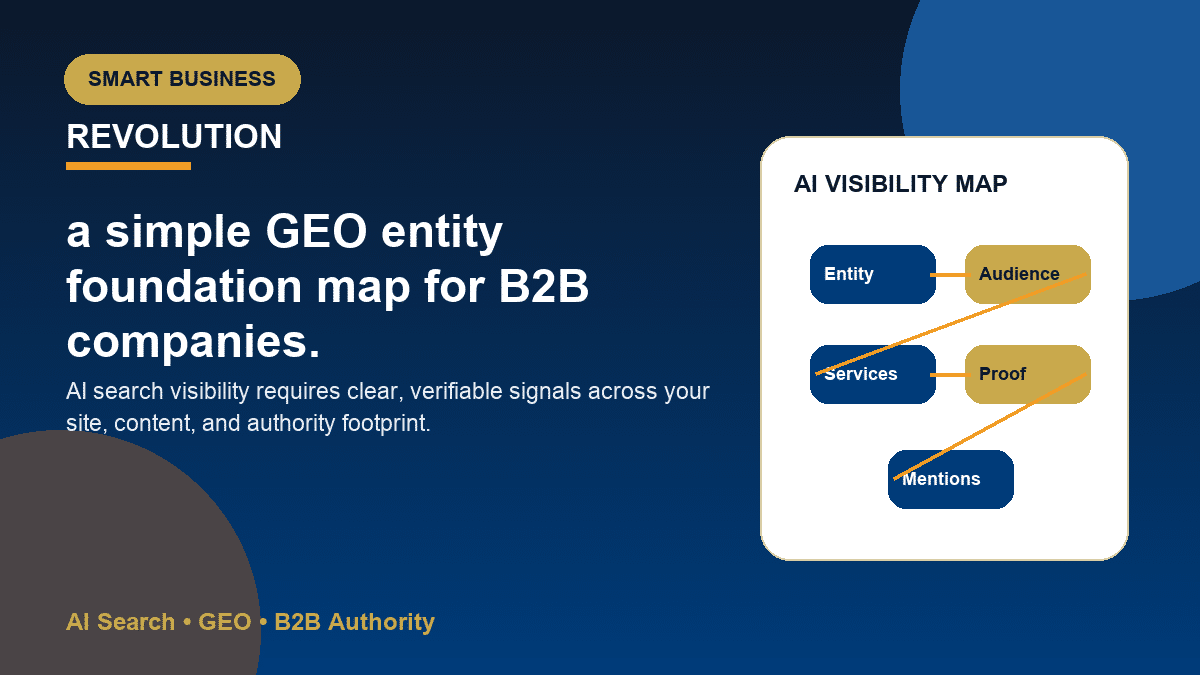
AI tools rely heavily on entities: people, companies, services, industries, topics, locations, and relationships between them. If the business is described differently on its website, LinkedIn profiles, podcast pages, directories, and guest articles, answer engines may struggle to understand what the company is known for.
This is one of the most common GEO mistakes to avoid because it feels boring. It is more exciting to write a big guide than to clean up bios, service descriptions, author pages, and company summaries. But inconsistency creates friction. If one profile says the company helps coaches, another says agencies, and another says B2B founders, the signal gets muddy.
A strong first 90 day move is to create a simple entity brief. Include the official company name, founder name, target audience, core services, proof points, media mentions, and preferred descriptions. Use that language consistently.
3. Publishing Content Before Understanding Buyer Questions
Many teams begin with topics they want to rank for instead of questions buyers actually ask. GEO rewards content that helps answer engines resolve specific buyer intent. A founder asking, “What is the best CRM consultant for a 20 person firm?” is not looking for a generic blog post about CRM trends.
In the first 90 days, collect questions from sales calls, discovery calls, proposal objections, customer interviews, podcast conversations, and support emails. Group them by intent: problem aware, solution aware, vendor comparison, implementation, pricing, risk, and proof.
Then create content that answers those questions directly. Strong GEO content sounds like a sharp consultant explaining the issue to a real buyer. It is specific, honest, and grounded in experience.
4. Using Generic AI Content as the Main Strategy
AI writing tools can speed up drafting, but they cannot replace original judgment. One of the worst early GEO mistakes is flooding a site with generic articles that repeat obvious points. Answer engines already have access to generic information. They need reasons to trust this business as a useful source.
Original examples, frameworks, client patterns, founder opinions, process details, and mistakes learned from real work all matter. A post that says “build authority and create quality content” is forgettable. A post that explains how a founder should audit 20 discovery calls and turn them into answer assets is much more useful.
Use AI to organize, outline, summarize, and edit. Do not let it remove the point of view. The content should make it clear that a real expert has done the work.
5. Ignoring Proof, Authority, and Trust Signals
GEO is not only about what a company says. It is about what can be verified. Answer engines look for corroborating signals across the web. Case studies, testimonials, podcast appearances, founder bios, awards, partner pages, and thoughtful guest content can all strengthen trust.
The mistake is treating proof as decoration. A testimonial hidden near the bottom of a homepage is useful for conversions, but it may not be enough for AI visibility. Proof should be specific and connected to the topics where the company wants to be recommended.
For example, if a firm wants to be cited for AI visibility strategy, it should have service pages, articles, examples, and founder commentary that reinforce that expertise. Topic depth works best when every asset supports one strategic theme.
6. Optimizing Pages but Neglecting the Broader Web
A company website is the home base, but it is not the whole footprint. AI systems draw from many sources. If the website says one thing and the rest of the internet says very little, the company may be harder to trust. If third party sources reinforce the same expertise, the signal gets stronger.
In the first 90 days, founders should identify the most realistic authority sources. These might include podcast interviews, partner pages, association profiles, relevant directories, contributed articles, YouTube descriptions, and LinkedIn content. The goal is not volume. The goal is consistency and credibility.
This is especially important for relationship based businesses. A founder with a long podcast archive, client network, or referral ecosystem may already have assets that can support GEO if they are organized and connected.
7. Measuring the Wrong Results in the First 90 Days
Traffic is not the only early signal. In fact, traffic may lag while visibility improves. GEO requires a broader dashboard. Companies should monitor whether they appear in answer engines for target prompts, how accurately they are described, which competitors are mentioned, and what sources are cited.
Useful early metrics include branded answer quality, non branded prompt visibility, citation frequency, share of answer, referral traffic from AI tools, sales team feedback, and changes in high intent demo or contact requests.
Here is a simple comparison:
8. Building Content Without Internal Links or Conversion Paths
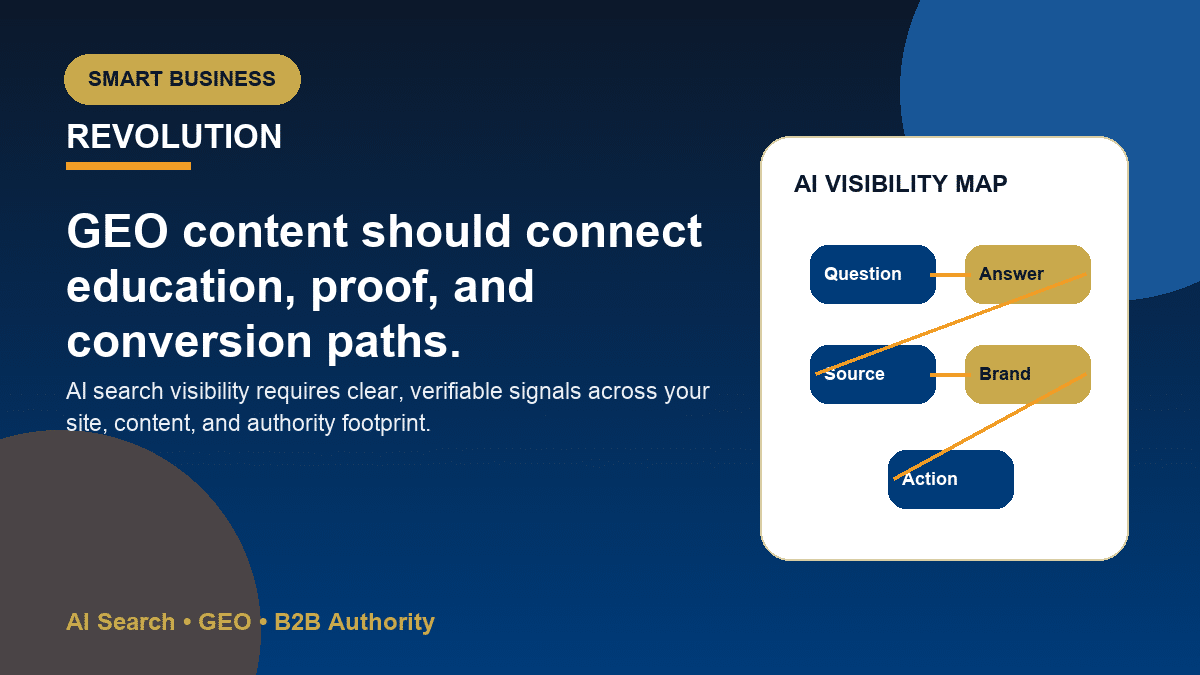
Internal links help both people and machines understand what matters. A strong GEO page should connect to related guides, service pages, case studies, podcast episodes, and contact paths. Without those links, the page becomes isolated.
The mistake is publishing a helpful article that never tells the reader what to do next. If the article explains a problem, it should point to a deeper resource or a relevant offer. If it explains a service category, it should make the next step obvious.
For example, a founder researching AI visibility may need a deeper implementation plan, a clearer diagnostic, or a direct path to talk with an expert. A clear path helps the right buyer continue the conversation.
9. DIY vs Agency GEO: Choosing the Right Path
Some companies can handle the first 90 days internally. Others need outside support because they lack time, strategy, or technical confidence. The right choice depends on complexity, team capacity, and how important AI visibility is to growth.
DIY works when the founder can commit to a clear weekly operating rhythm. Agency support works when the opportunity cost of delay is higher than the investment.
10. Questions to Ask Before Investing in GEO
Before spending heavily, ask practical questions. Can the company explain its niche in one sentence? Are the target buyers clear? Does the website show proof? Are service pages specific? Are founder bios consistent? Are there strong answers to common objections?
Also ask whether the company has enough original insight to support a content program. If every article would sound like a summary of other articles, the business needs more customer research before publishing at scale.
The best GEO programs start with business clarity. The technology matters, but it cannot fix fuzzy positioning.
Conclusion
The biggest GEO mistakes to avoid in the first 90 days are not exotic. They are usually basic business and content mistakes: unclear positioning, weak proof, generic articles, inconsistent profiles, poor internal links, and shallow measurement.
Founders who slow down enough to build the right foundation can move faster later. Start with the buyer, clarify the entity, publish useful answers, reinforce authority, and measure whether AI tools understand the company accurately.
CTA: If GEO matters to the next stage of growth, visit the Smart Business Revolution contact page to start a practical conversation.
Related Guides
- What Is AI Visibility?
- GEO Search Optimization
- GEO AI Optimization Services
- Services
- Contact Smart Business Revolution
FAQ
What are the biggest GEO mistakes to avoid?
The biggest mistakes include unclear positioning, generic AI content, inconsistent entity signals, weak proof, poor internal links, and measuring only website traffic.
How is GEO different from SEO?
SEO focuses heavily on search rankings and clicks. GEO focuses on whether AI answer engines can understand, trust, cite, and recommend a company in generated answers.
Can a small business win with GEO?
Yes. Small businesses can compete when they have a clear niche, specific expertise, strong proof, and useful content that answers real buyer questions.
How long does GEO take to work?
Early improvements can appear within 90 days, especially for branded prompts and answer accuracy. Broader non branded visibility usually takes longer.
Should GEO content be written with AI tools?
AI tools can help with drafting and organization, but the final content should include original expertise, examples, and clear judgment from the business.
What should a company do first?
Start with an entity and positioning audit. Make sure the company, founder, services, audience, and proof points are described clearly and consistently.
What metrics matter most for GEO?
Track prompt visibility, answer accuracy, citations, share of answer, branded search quality, AI referral traffic, and sales qualified inquiries.
Final CTA
GEO rewards clarity, credibility, and consistency. The companies that build those assets now will be easier for buyers and AI tools to understand later.
About the Author

John H. Corcoran is an AI Visibility expert, former White House Writer, speechwriter, attorney, and author. He is the creator of Smart Business Revolution and host of the Smart Business Revolution podcast. Since 2010, he has interviewed over 1,500 successful entrepreneurs, CEOs and experts.
He is the author of 3 books about relationship building and client acquisition, and has been profiled in Forbes and featured in Entrepreneurial You (Harvard Business Review Press), Stand Out (Portfolio) by Dorie Clark, The Connector’s Advantage (Page Two) by Michelle Tillis Lederman, Success Is In Your Sphere (McGraw-Hill Education) by Zvi Band, and The Successful Mistake by Matthew Turner. His writing has appeared in Forbes, Entrepreneur, Huffington Post, Art of Manliness, Lifehacker, Business Insider, and numerous other publications.
Ready to explore how to get more AI visibility? Schedule a free consultation with John to discover how you can get more AI visibility.
Contact John →